2026-05-21
Common Boring Head Problems and How to Improve Machining Stability
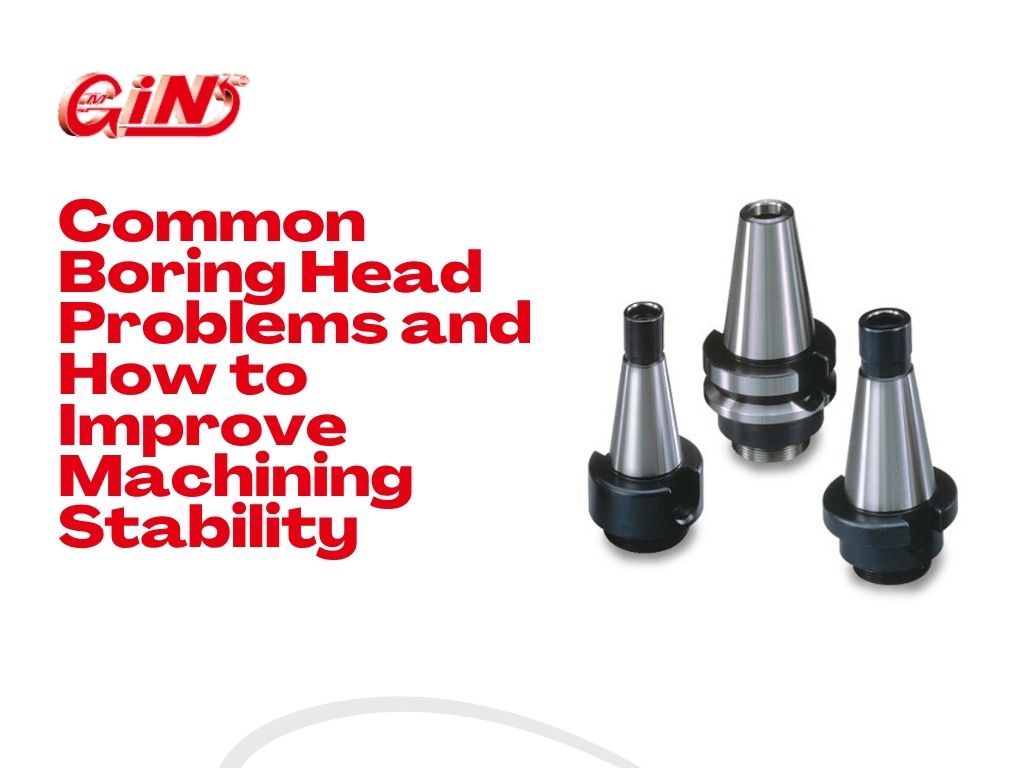
In precision machining, achieving accurate hole dimensions and smooth surface finishes depends heavily on machining stability. Even with advanced CNC machines and high-quality cutting tools, unstable boring operations can lead to vibration, dimensional errors, poor surface quality, and excessive tool wear.
One of the most important tools in precision hole machining is the boring head. Whether used for rough boring or fine finishing, the performance of a boring head directly affects machining accuracy and productivity. However, many manufacturers encounter common problems during boring operations that reduce machining stability and compromise final part quality.
This article explores the most common boring head problems and explains how to improve machining stability for better precision and efficiency.
Why Machining Stability Matters in Boring Operations
Unlike standard drilling, boring is a finishing process designed to enlarge and refine an existing hole with high accuracy. During this process, even minor vibration or instability can affect:
-
Bore diameter consistency
-
Surface roughness
-
Roundness and concentricity
-
Tool life
-
Production repeatability
Because the cutting tool extends outward from the boring head, the setup naturally creates overhang and potential vibration. This makes machining stability especially important in precision boring applications.
Common Problem #1: Vibration and Chatter
One of the most common issues in boring operations is chatter, which appears as vibration marks or irregular surface patterns inside the bore.
Common causes include:
-
Excessive tool overhang
-
Insufficient spindle rigidity
-
Incorrect cutting speed or feed rate
-
Weak clamping of the workpiece
-
Poor boring head balance
Chatter not only affects surface finish but may also cause inaccurate bore sizes and shortened tool life.
How to improve stability:
-
Reduce tool overhang whenever possible
-
Use a rigid boring bar with proper diameter support
-
Optimize spindle speed and feed settings
-
Ensure secure workholding and machine rigidity
-
Select a high-quality precision boring head with stable structure
Stable clamping and proper setup are essential for minimizing vibration during boring operations.
Common Problem #2: Inconsistent Bore Diameter
Another frequent problem is inconsistent bore size between parts or across multiple machining cycles.
Possible causes:
-
Loose adjustment mechanisms
-
Thermal expansion during machining
-
Improper insert installation
-
Poor repeatability in manual adjustments
In fine boring applications, even micron-level deviation can lead to rejected parts.
How to improve accuracy:
-
Use precision adjustment systems with clear graduations
-
Verify insert positioning before machining
-
Minimize temperature variation during long machining cycles
-
Choose boring heads with stable and repeatable adjustment mechanisms
High-precision boring heads help maintain consistent bore diameter across production batches.
Common Problem #3: Poor Surface Finish
Surface finish is one of the key indicators of boring quality. Rough or uneven surfaces may affect sealing, assembly, or part performance.
Common reasons include:
-
Tool vibration
-
Dull inserts
-
Incorrect cutting parameters
-
Poor chip evacuation
-
Unstable spindle rotation
Solutions for better surface quality:
-
Use sharp and properly selected inserts
-
Improve coolant flow and chip removal
-
Adjust cutting speed and feed rate for finishing operations
-
Ensure balanced rotation and rigid setup
A stable boring process produces smoother surfaces and improves overall machining quality.
Common Problem #4: Excessive Tool Wear
Tool wear increases machining cost and reduces process consistency.
Factors that accelerate wear include:
-
Vibration and chatter
-
Improper insert geometry
-
Excessive cutting load
-
Poor cooling conditions
When the boring setup lacks rigidity, cutting edges experience unstable contact with the workpiece, causing premature wear.
How to reduce tool wear:
-
Use stable and rigid boring systems
-
Match insert geometry to the workpiece material
-
Optimize cutting conditions
-
Avoid excessive overhang
Reducing vibration significantly improves insert life and machining reliability.
Common Problem #5: Difficulty Maintaining Concentricity
Concentricity is especially important in applications such as hydraulic components, aerospace parts, and precision molds.
Causes of poor concentricity:
-
Spindle runout
-
Improper boring head installation
-
Weak tool clamping
-
Machine alignment issues
Recommended improvements:
-
Inspect spindle condition regularly
-
Ensure proper mounting of the boring head
-
Use precision-ground shanks and components
-
Verify machine alignment and rigidity
A high-quality boring head with accurate adjustment and stable construction helps maintain concentricity during precision machining.
The Importance of High-Quality Boring Heads
The boring head itself plays a major role in machining stability. A poorly designed boring head may introduce vibration, inconsistent adjustment, or unstable cutting performance.
A precision boring head should provide:
-
Rigid and balanced construction
-
Accurate adjustment mechanisms
-
Stable insert holding
-
Smooth rotational balance
-
High repeatability during setup
These characteristics help improve machining accuracy while reducing downtime and setup errors.
Gin Tech Precision Boring Head Solutions
At Gin Tech, we design precision boring heads for demanding CNC machining applications where stability and accuracy are critical.
Our boring heads are engineered to support consistent machining performance through:
-
High-precision micrometer adjustment for accurate bore size control
-
Rigid alloy-steel construction to improve stability and reduce vibration
-
Balanced rotational design for smoother machining performance
-
Stable insert clamping mechanisms for repeatable cutting accuracy
-
Compatibility with multiple shank systems for flexible machine integration
These features help manufacturers improve machining stability, surface finish, and dimensional consistency across precision boring operations.
FAQ: Boring Head Stability and Accuracy
Q1: What causes chatter in boring operations?
Chatter is typically caused by excessive tool overhang, poor rigidity, incorrect cutting conditions, or unstable workholding.
Q2: How can I improve boring accuracy?
Use a precision boring head, minimize vibration, optimize cutting conditions, and maintain proper insert setup.
Q3: Why is boring more sensitive to vibration than drilling?
Because the boring tool extends away from the centerline, creating higher leverage and increased potential for vibration.
Q4: Does boring head quality affect surface finish?
Yes. A rigid, balanced boring head helps reduce vibration and improves surface quality and dimensional consistency.
Conclusion
Machining stability is one of the most important factors in successful boring operations. Problems such as chatter, inconsistent bore diameter, poor surface finish, and excessive tool wear are often linked to unstable setups or low-quality tooling.
By selecting the right boring head, optimizing cutting conditions, and improving setup rigidity, manufacturers can significantly improve machining accuracy and productivity.
At Gin Tech, we provide precision boring head solutions designed to support stable and reliable machining performance in demanding CNC applications. Our precision-engineered boring heads help manufacturers achieve accurate hole finishing with greater efficiency and consistency.